Are your walls or roof damp and paint is peeling? - Types, Causes & troubleshooting leakages
- archcivilwork
- May 4, 2022
- 9 min read
Further to previous article that was on "Cause & Types of cracks in walls and roofs", let us dwelve a bit deeper into after effects of the same. One of the most common signs which you will notice is that there will be leakage/seepage thru your walls causing dripping of water or peeling of wall paint due to dampness. What are the types of leakages & possible causes? What are the solutions available in the market and which one is right for you?
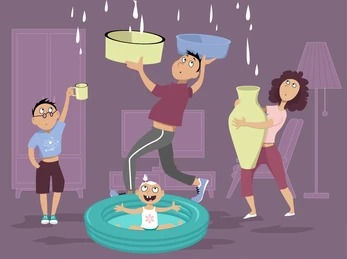
Firstly, let us look at the types & cause of Leakages :
Dampness :
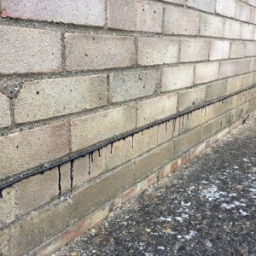
It is the state or remains of seepage/leakage, it can also be caused by external moisture or accidental water splash. The main source of dampness is due to a low lying area and moisture rising due to capillary action from foundation/ground/earth filling below the floor. It will usually be noticed from the bottom up to a height of 4ft on vertical walls. It can also be noticed on external walls of the superstructure during monsoons if the plaster has given way, as a result of which small pathways known as capillaries are formed in the plaster and brickwork allowing the passage of moisture.

Leakage :
It is generally noted in walls or ceilings which are in the vicinity of wet areas like kitchen, bathroom, toilet, elevated gardens, dry balcony, roofs. The cause of leakages are usually quite straight forward and visible such as bad tile grouting, sub-standard tiling work, sub-standard plumbing, plumbing joint, old G.I. pipes, cracks in roof (specially during monsoons), Overhead water tank.

Seepage:
It is similar to the leakage as mentioned above, however the rate of leakage is much slower which is why the leakage shows up as seepage on the walls. The source can be one or a combination of reasons but is majorly attributed to poor construction quality if it is a fairly new building or in buildings which are older due to contraction & expansion over the years which takes a toll on the superstructure.
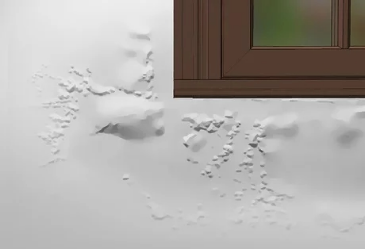
Another often overlooked but important topic to discuss here is “Capillary action”. In simple terms it is the upward movement of water against the force of gravity, through porous spaces in a material due to cohesion, surface tension and adhesion. It occurs when the adhesion force of water to the walls is stronger than the cohesive forces between the water molecules.
A simple DIY experiment to understand capillary action is to take a bowl of water and a sheet of recycled paper which is more porous than regular paper, and dip it only a little in the water and observe how the water now starts making it’s way up the piece of paper eventually wetting it upto a certain level.
Similarly, porosity in concrete and red clay bricks provide perfect capillaries for the water to rise up from the bottom upto a certain height in the wall, which is then noted as wall dampness by the observer.
Efflorescence can also be seen in red clay bricks as the salts from within the bricks are now washed away due to the movement of water within the bricks, these salts are then carried over and deposited on the outermost surface which show up as white patches on walls.

Having discussed the main types of leakages which can occur in a residential property let us now look at the solutions.
Waterproofing Solutions :
Dampness, Leakage or Seepage in any wall or roof is something that a house owner dreads the most. Remedies are available for these issues, however a permanent solution is only possible when there is proper "root cause analysis" done and the issue is treated at the root. Just covering with a wallpaper or repainting the wall will not suffice, as the seepage/dampness will continue in the background. Also, these issues should be remedied as soon as practical or else it can weaken the structure and ultimately cause failure in extreme cases. Let us now have a look at some solutions that are available in the market.
Damp Proof Course (DPC) :
The provision of a damp proof course (DPC) at plinth level of the house saves its walls from ‘rising dampness’ through capillary action as the bricks used in foundations are porous in nature.
For house area, where RCC basement has not been provided and brick foundations have been raised, a 1.5-inch thick concrete Damp Proof Course (DPC) should be laid on foundation walls at plinth level. The concrete used should be 1:1.5:3 and water proofing compound should be added to it.
Only 10 mm size coarse aggregate should be used in the concrete in view of its small thickness.
Its water content should be kept low to avoid flowing out of cement slurry.
All external walls should be provided with vertical DPC on their inner side. Vertical DPC is in 1:3 cement mortar and not in concrete.
It is very important to provide vertical DPC to prevent rise of moisture.
After the curing of DPC is over and it has become dry, two layers of bitumen should be applied over the DPC by using 85/25 grade bitumen.
Immediately after applying bitumen, sand should be applied over it.
Preference should be given to use of polymer modified material coating instead of bitumen over the DPC. It can be applied with a brush and on wet surface also.

Brick Bat Coba Method :
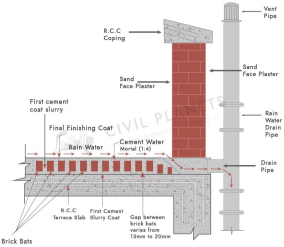
RCC slabs sometimes develop cracks, which allows for a passage of rainwater. It is therefore important to develop water-proof roof slabs, which can provide leak-proof environment to the interiors of the building. This method requires a roof surface slope for quick drainage and sealing of all cracks and joints. Flat type roof with RRC is used in climates with moderate to low rainfall. Coba treatment can be carried out directly on RCC or stone slabs:
The surface of the roof slab should be cleaned and washed with water before laying the first course
A fresh slurry is prepared by mixing cement with 1-2% super seal powder (acrylic based acrylintryl chemical)
The slurry is first mixed dry and then water is added until it reaches a uniform consistency
This freshly prepared slurry is spread on the cleaned roof surface to create a smooth thin layer
Cement sand mortar is prepared by adding 1-2% super seal powder in a 1:5 cement sand dry mix (1 part cement, 5 part sand)
Water is added to obtain a plastic mortar
This cement mortar is spread on top of the thin slurry layer to obtain a 20mm thick cement mortar layer
Brick bats are inserted in the 20mm cement mortar layer to create a 100-150 mm brick bat later layer
The cement sand mortar is then used for grouting the previously laid brick bat layer. All voids and joints are filled. Ensure a smooth slope surface over the brick bat layer
Freshly prepared plastic cement sand mortar is further spread on the grouted brick bat layer
The grouted surface is allowed to cure for 2-3 days to avoid surface cracks.
Another cement sand mortar is prepared (1 part cement, 5 part sand) with 1-2% super seal powder. Water is added until the mixture is consistent.
20mm thick layer of this mortar is spread over the brick bat mortar layer
A trowel is used for finishing. Square markings can be made by string or trowel. This is to prevent surface cracking due to expansion or contraction in response to temperature change.
Curing is continued for 2 weeks

Cementitious Waterproofing :
Cementitious products are probably the easiest waterproofing materials to use. They’re readily available from suppliers of masonry products, and they’re easy to mix and apply. If you plan to use this material, a long-handled brush will make your life easier. Also, spend the extra money to buy acrylic additive (a white, milky liquid) to mix in with the cement product. You’ll get better bonding and a more solid, durable coating.
The chief disadvantage is that cementitious products have no give to them probably because cement just doesn’t stretch to any degree worth mentioning. They will stand up fine to a head of water, but will tolerate almost no joint or crack movement.
Cementitious waterproofing is used in the following type of structures:
Water Treatment Plants
Sewage Treatment Plants
Bridges
Dams
Railway & Subway Systems
Marine Cargo Ports & Docks
River Locks/Channels & Concrete Dykes
Parking Structures & Lots
Bathroom / Toilets / Kitchen

These are some of the waterproofing methods which can be used during the time of new construction or major structural repairs, but since this is not always a practical option, let us now have a look at waterproofing solutions which are available for existing structures.
A very popular option available these days is Membrane based waterproofing as it is cheaper and cost effective and some manufacturer’s claim up to 10 yr’s warranty on their products, different materials can be used as a membrane here are some popular options:
Bituminous Sheet Membrane waterproofing:
Bitumen is more commonly used in the form of felt or flexible membrane formed by sandwiching jute fabric or fibreglass/polypropylene mats with chemically modified bitumen. These membranes are laid on the roofing over a bitumen primer. There are two types of membranes one is cold applied and the other hot applied which means one needs to heat the edges of the felt with a torch so that they melt and stick to the second layer in the overlap area.
On the RCC flat roofs the bitumen felts have not been successful because of the unacceptable black appearance and inaccessibility of the terrace for other social uses. Technically it is not preferred because bitumen layer or felt on the terrace not only makes it watertight but also airtight. Concrete has a breathing property, It takes water/moisture and breathes out water vapour. Hindrance of this breathing property of concrete develops pore pressure, which causes blisters in the felt.
After a few seasons the blisters multiply and eventually delaminate the felt from the concrete surface. Hindrance of breathing property of concrete makes the concrete weak. But on the asbestos cement sheets and zinc sheets in factory roofs, this bitumen felt is the only dependable waterproofing system. Hence all factory roofs in India adopt this water proofing system.

Bituminous Coating membrane waterproofing :
Bituminous coating is a type of coating used for waterproofing and flexible protective coating. It is an excellent protective coating and waterproofing agent, especially on surfaces such as concrete foundations.
Bituminous membrane waterproofing is a popular method used for low-sloped roofs due to their proven performance.
Polyurethane membrane based waterproofing :
Polyurethane consists of two liquid components one is called the base component and the other is called reactor or curing agent. Base is a polyol and the reactor is an isocyanide such as TDI or MDI. There are various grades of polyols and so also there are numerous isocyanides. The combination of these two ingredients results in a formation liquid applied rigid membrane or a foam depending upon the selection. It is very sensitive to moisture and more expensive for residential use when compared to “Liquid waterproofing membrane”.
In waterproofing, this rigid liquid membrane was tried with fibreglass reinforcing mats. The systems failed because coefficients of thermal expansion of concrete and rigid PU membrane being different lateral movement or creep occurred with the passage on one working climatic cycle. When exposed to ultra violet rays or direct sunlight most polyurethane rigid membranes became brittle and crumbled.
Apart from this the application of polyurethane coating needed very rigorous surface preparation. The surface needed to be neutralised by removing alkalinity from the concrete surface through acid itching then washing and blowtorching to make the surface bone dry. This kind of surface preparation with acids angered the civil engineering community and the product ceased to be used as waterproofing material apart from its several failures. Never the less continuous research in the polyurethane technology gave the construction industry excellent sealant for glazing industry and foams for thermal insulations. The new generation polyurethanes, which are alkali stable and water-based, may find better applications in waterproofing industry.
Epoxy membrane based waterproofing :
Like polyurethane is also a two-component system having a base resin and a reactor or curing agent. Base resin is obtained by dissolving bis-phenol A flakes in epichlorohydrin. This base is available in various viscosity ranges to suit different application conditions. The curing agent is an amine/polyamine aliphatic or aromatic, or an amine-adduct for general applications and polyamide or an amino-amide for coating purposes. After mixing base and reactor components the resultant viscous liquid or paste if some fillers are added to it can be brush applied like a paint or trowel applied like a mortar.
Here also epoxies not withstanding the alkalinity of concrete and the concrete needs to be acid washed and neutralised, which the civil engineers hated. Here again the coefficient of thermal expansion of concrete and epoxy being different the compatibility of epoxy in waterproofing exposed concrete surfaces such as roofs became limited. Later the use of epoxy in waterproofing was discarded. But epoxies have come to stay in civil engineering industry as bonding agents, floor & wall coatings, coatings for food processing units, operation theatres and computer and pharmaceutical industries.
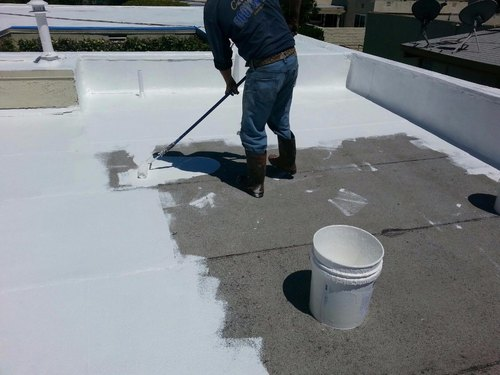
Liquid membrane waterproofing :
This is a very cheap and popular aftermarket type of waterproof coating which uses a primer coat a couple of top coats applied via roller, spray, or trowel. Compared with cementitious waterproofing, this offers more flexibility. This is because it turns into a rubbery coating on your wall when the liquid cures.
As a matter of fact, the elongation properties of such method will reach as high as 280 percent. However, it will depend on the type of polymer that the manufacturer uses to apply liquid waterproofing.
In conclusion, it can be noted that a good Civil Engineering/Contracting firm is quintessential at the time of construction of your new house or Industrial structure, to avoid issues such as cracks and water seepage which would otherwise, gradually appear at a later stage.
However, in the case of residential owners who are already facing these issues, aftermarket solutions are available provided that the correct root cause analysis is done by a qualified contractor and the filling/membrane is then applied in the correct manner so that it lasts a long time.


Comments